
By Rachel Whitmore · Hair & Scalp Editor | The Strand Report
All references are stated in the footer.
Estimated 6-minute read · Published September 13, 2026
Why the shedding never slowed down no matter what you tried, and the 60-second Korean ritual thousands of women now do in the shower instead.
Dermatology researchers call the scalp the "incubator" of every hair you will ever grow. It is also the one place nothing in your bathroom cabinet was designed to treat.
By Rachel Whitmore · Hair & Scalp Editor | The Strand Report
All references are stated in the footer.
Estimated 6-minute read · Published September 13, 2026
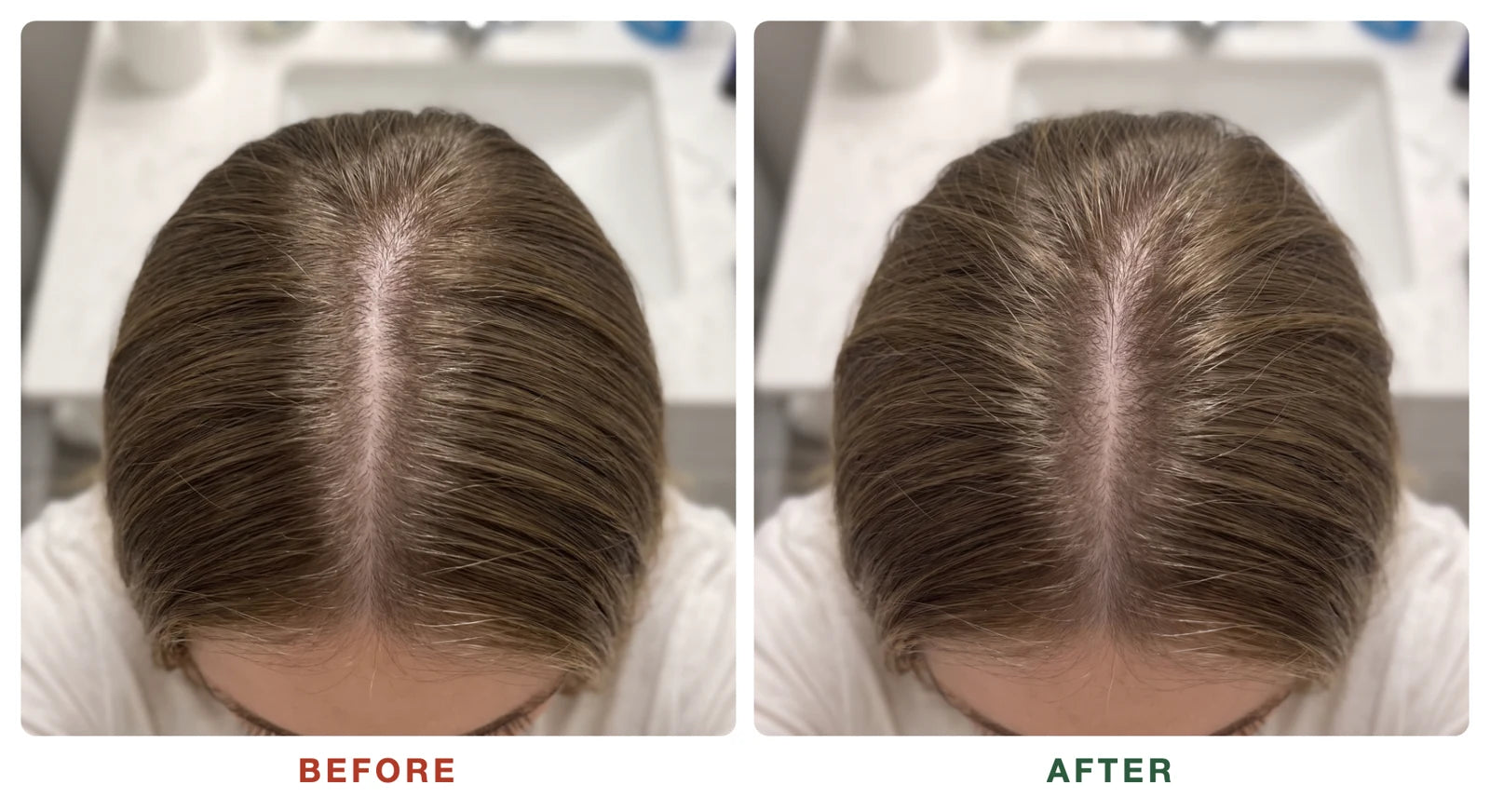
Shared in the group, five months apart. Individual results vary. [Placeholder d'exemple — remplacer par une vraie photo cliente avant de scaler.]
Every morning for the last three years, Susan Keller has done the same thing before work.
She leans toward the bathroom mirror, tilts her head down under the LED light, and checks whether the line of pale skin running down the middle of her head has gotten wider.
"I know it by heart," she says. "There's a freckle about two inches back. I used to measure against it. That's the part I never tell people."
Susan is 47. She works as a dental hygienist outside Dayton, Ohio. She is on her feet all day, eats fine, walks the dog, and is not the kind of person who falls apart over nothing.
Then in May, at her daughter's graduation, her sister took a photo of the two of them from behind.
"I made her delete it. My own graduation photo of my kid, and I made her delete it because of my part. I sat in the car after and thought, this has actually gotten somewhere bad."
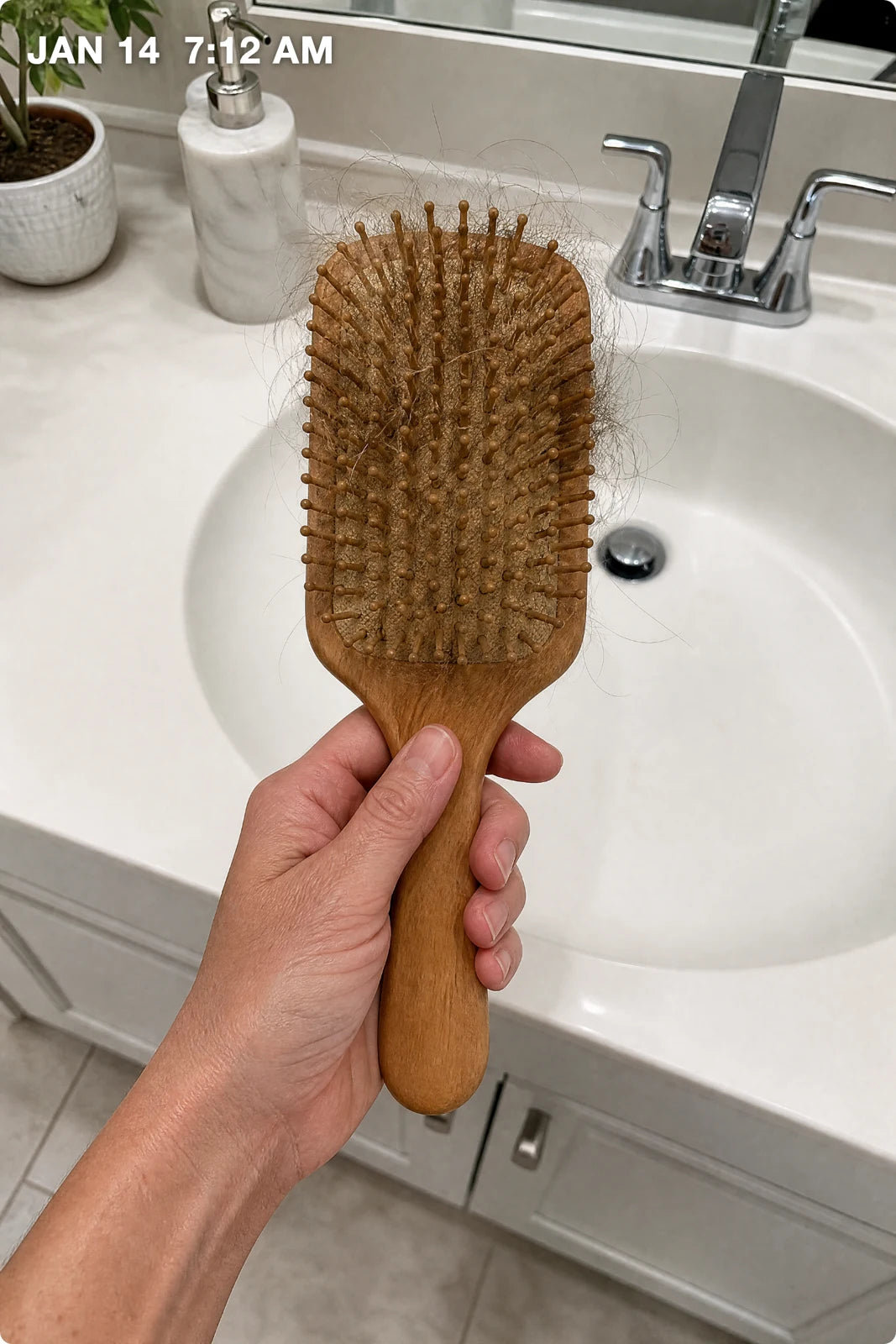
The brush was full every morning. The shower drain needed clearing every week, then every couple of days. Her ponytail, which used to take two loops of the elastic, now takes three.
"I didn't feel like me anymore," she says. "That's the only way I can put it."
What Susan didn't know at the time is that the problem she was fighting may never have been her hair at all. It may have been the surface her hair grows out of, a surface she had never treated once in thirty years of buying hair products.
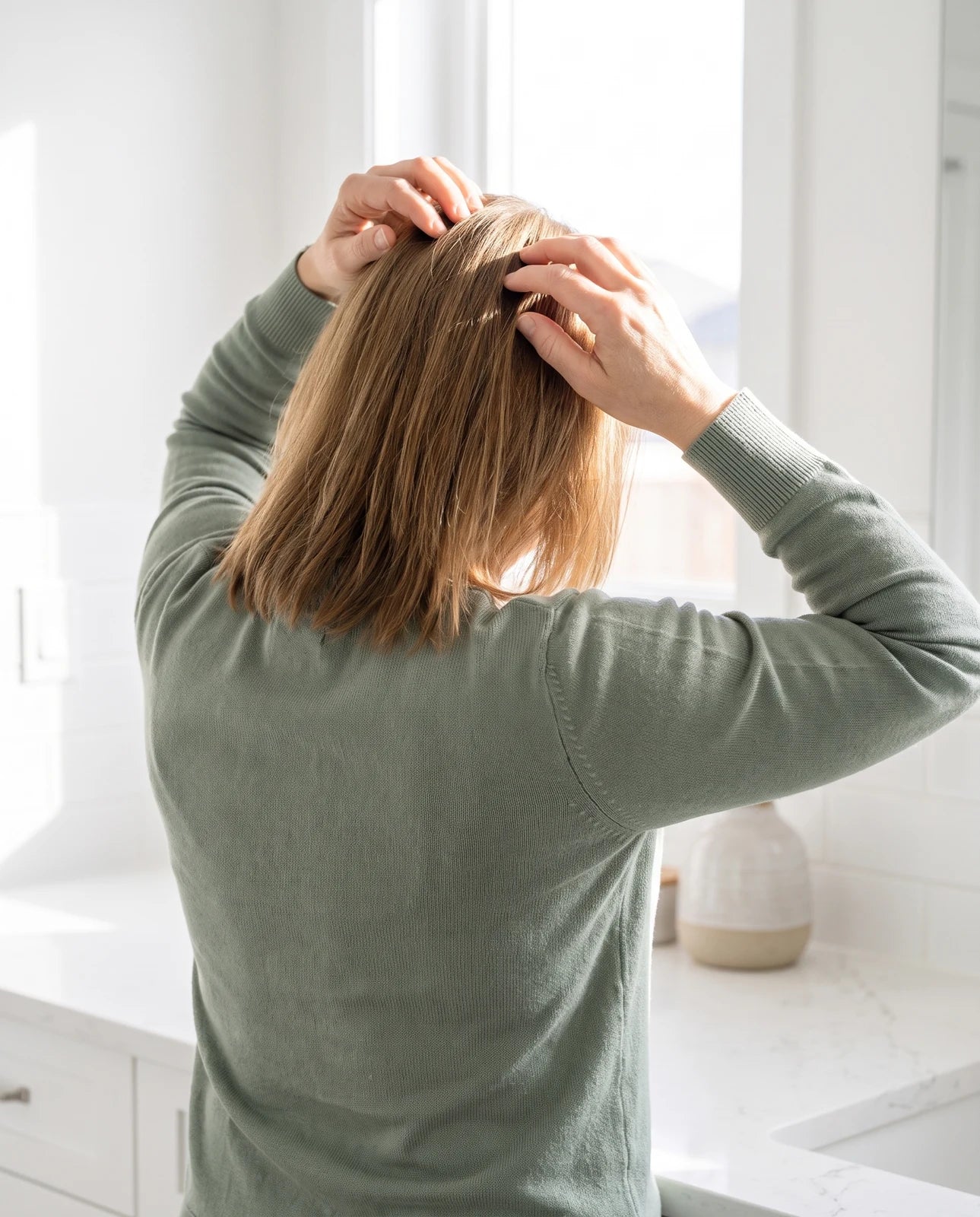

A part that looks wider under the bathroom light than it did in photos two years ago

A handful of hair in the drain catcher after every wash

A hair tie that goes around one more time than it used to

A full brush, a full pillowcase, every single morning

Roots that feel oily and itchy by the day after wash day

Little baby hairs that show up along your part and then never seem to grow past an inch

Products that seem to work for two weeks, then quietly stop
Three or more?
You have probably been treating each of those as its own separate problem, with its own separate product. What if they all trace back to one surface nobody, including your doctor, ever looked at?
Susan did what you are supposed to do. She went to her doctor.
Her doctor ordered blood work. Thyroid, iron, hormones. Everything came back normal. She was told it was probably stress, probably age, and to try a multivitamin.
The dermatologist visit lasted eleven minutes. She left with the name of a foam from the drugstore.
"Everyone tested my blood," Susan says. "Two doctors, three years. Nobody once looked at the actual surface my hair grows out of. Nobody even touched my head."
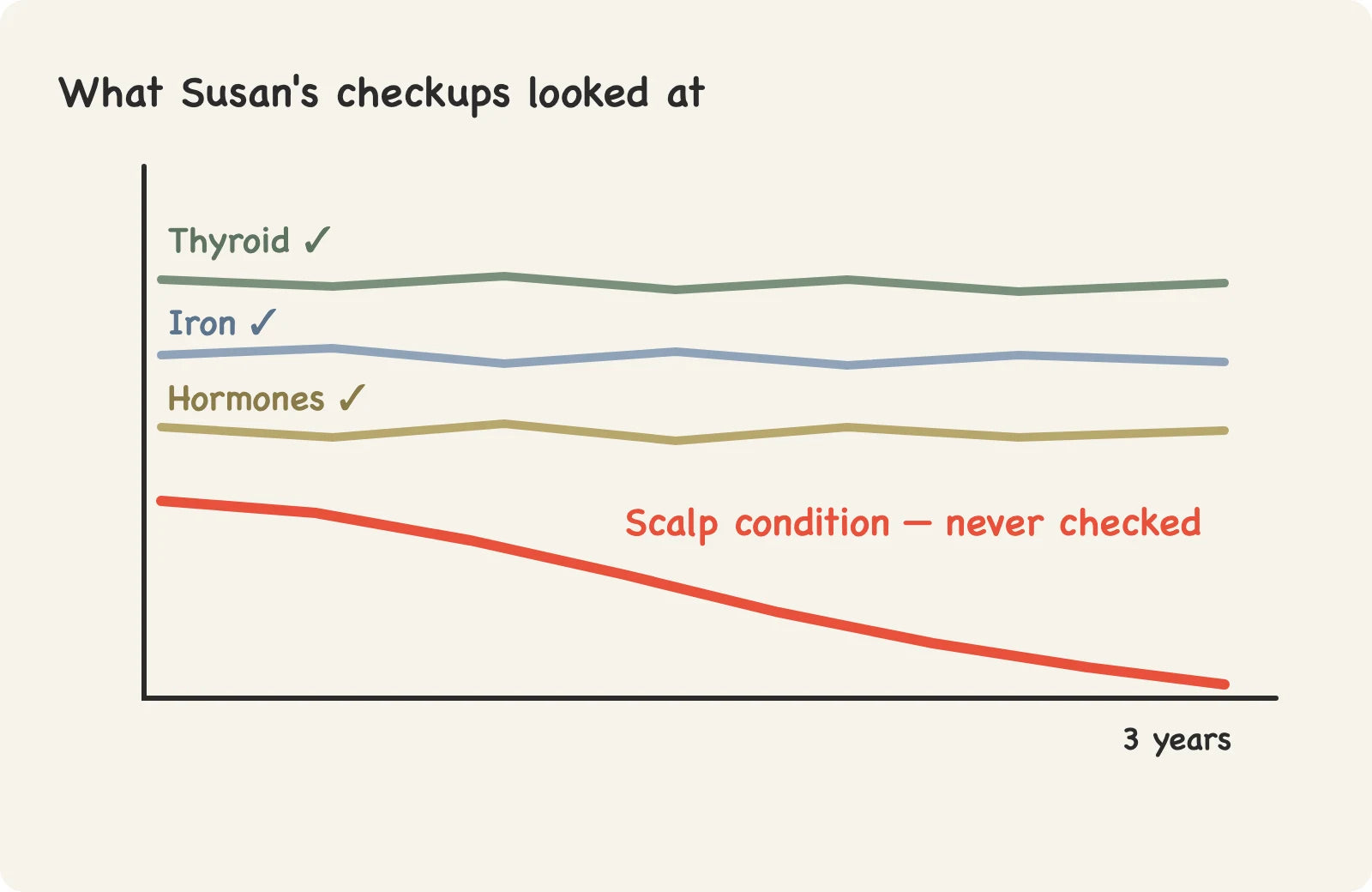
There is a reason nobody looked there, and it is not that her doctors were bad doctors.
According to the American Academy of Dermatology's own numbers, an estimated 30 million American women are living with hereditary hair thinning, and that figure leaves out the shedding that comes with stress, postpartum recovery, and menopause. The demand for answers is enormous. Almost all of it gets funneled toward two places: prescriptions for the hair, and pills for the bloodstream.
The scalp itself sits in between, and it belongs to nobody's specialty.
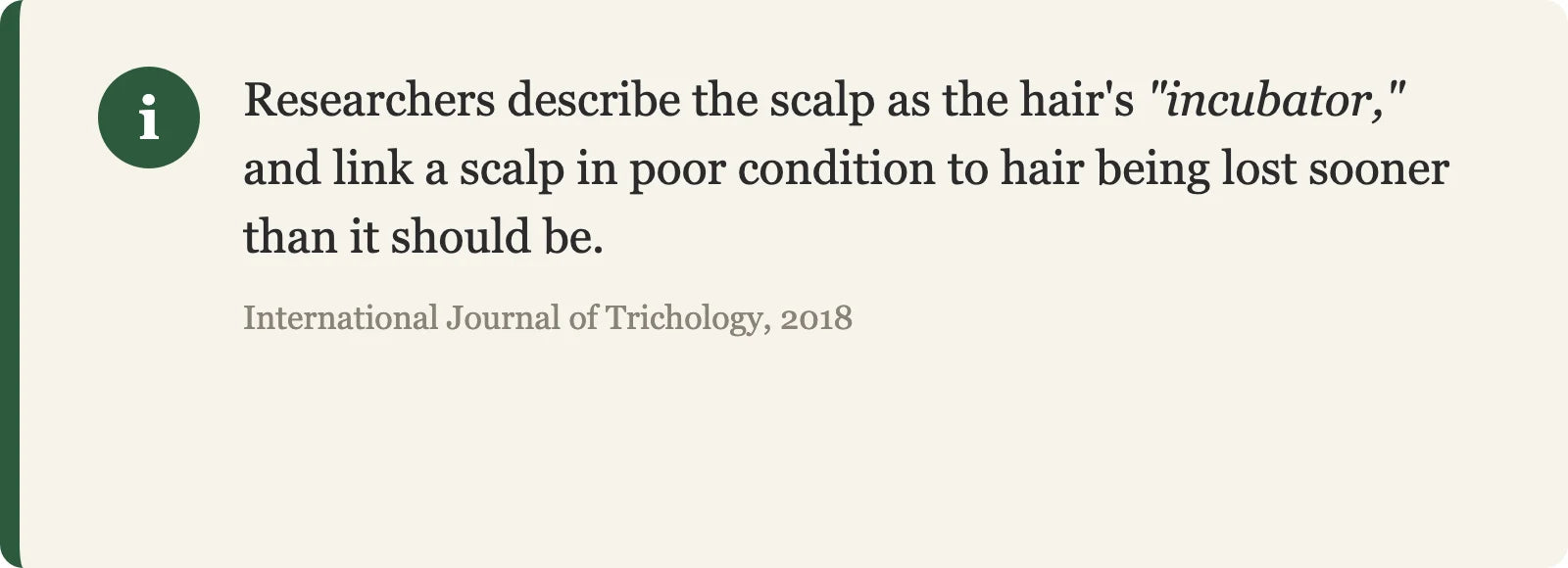
Yet in a 2018 review in the International Journal of Trichology, researchers described the scalp as the hair's "incubator," and linked a scalp in poor condition, the flaking and irritation kind, to hair being lost sooner than it should be. In one placebo-controlled trial from that same body of research, treating the scalp alone, and nothing else, measurably raised hair counts in nine weeks.
Hold on to that thought, because Susan had spent three years and, by her count, over six hundred dollars treating everything except that.

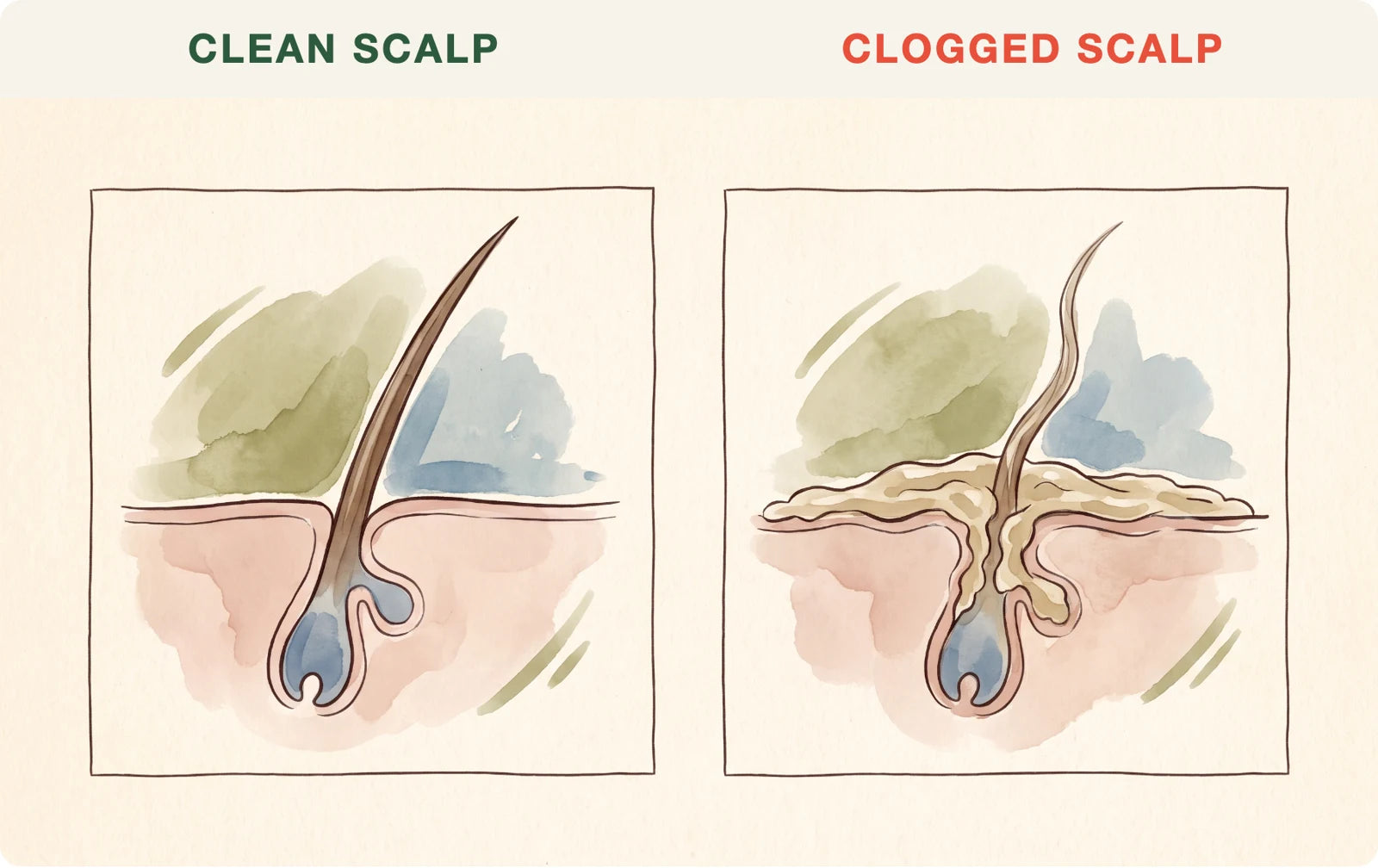
Think of your scalp less like skin and more like soil.
Every hair on your head spends the first part of its life below the surface, inside a follicle, before you ever see it. Whatever condition that surface is in, that is the condition your hair starts its life in.
The problem is what settles on that surface, week after week.
Sebum your skin produces daily. Sweat. Styling products. Dry shampoo. And the residue of the shampoo itself, because a typical industrial shampoo is about 80 percent water, and much of the rest is built to smooth and coat the hair shaft, not to clear the skin underneath it.
None of that rinses off the scalp on its own. There is no mechanism up there that clears it for you. It just sits, layer over layer, packing in around the base of every hair.
One hairdresser Susan later spoke to has a name for it. She calls it a choked root.
"She put it like this," Susan says. "It's like watering a plant by soaking the sidewalk next to it. The water's fine. The plant's fine. It's just never actually reaching the dirt."
And if you think washing more would make things worse, the research says the opposite. A 2021 study in a dermatology journal followed 1,500 women and found that the ones who washed more often had less flaking, less itching, and reported better hair, including less shedding, not worse. Skipping washes doesn't save your hair. It gives the buildup more time.
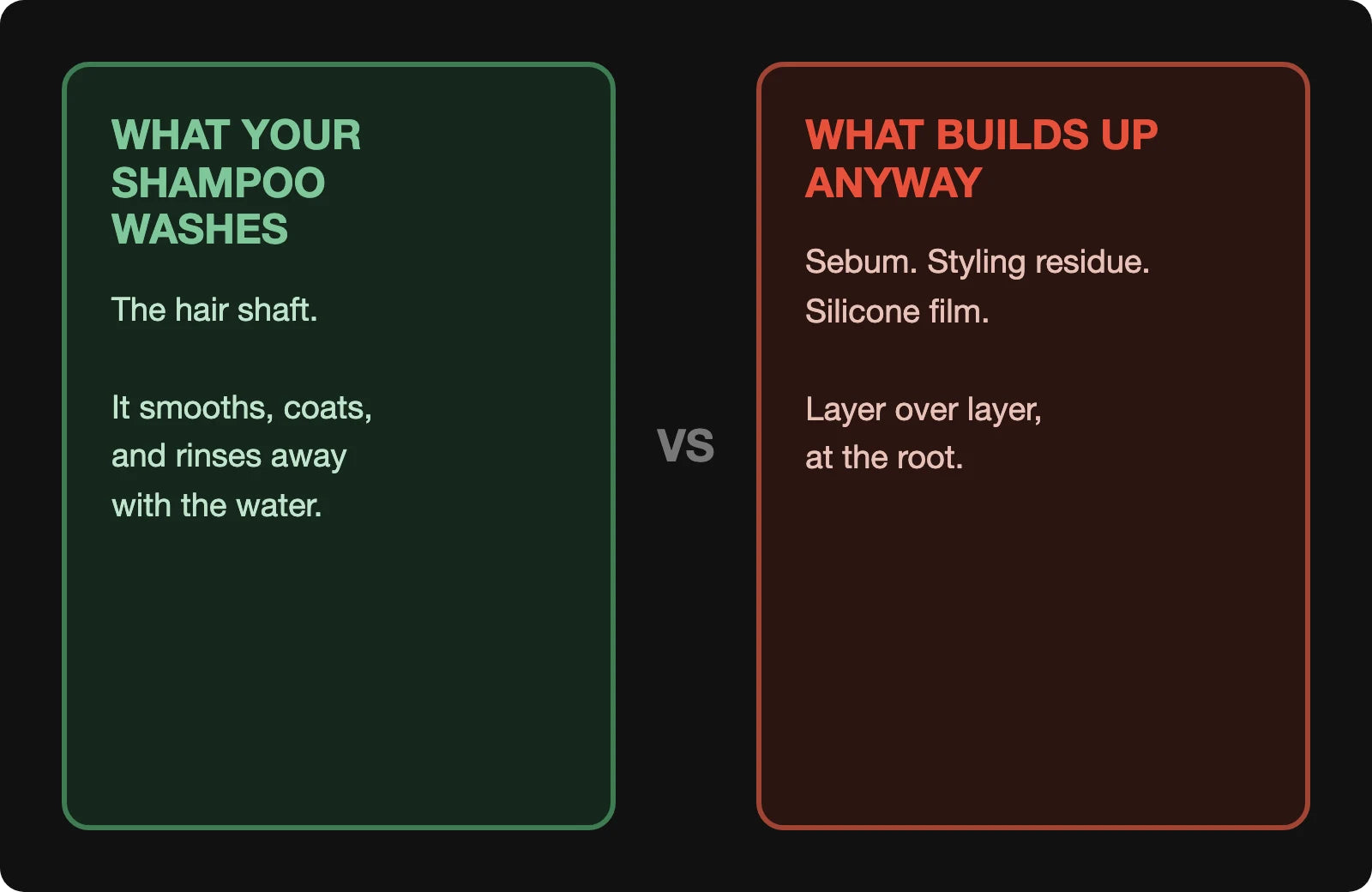
A follicle growing out of a packed, irritated surface doesn't die overnight. It downshifts.
Each new hair it produces comes in a little finer than the one before. Fine becomes fragile, fragile becomes fuzz, and eventually the follicle stops pushing hair out at all and just sits there, resting.
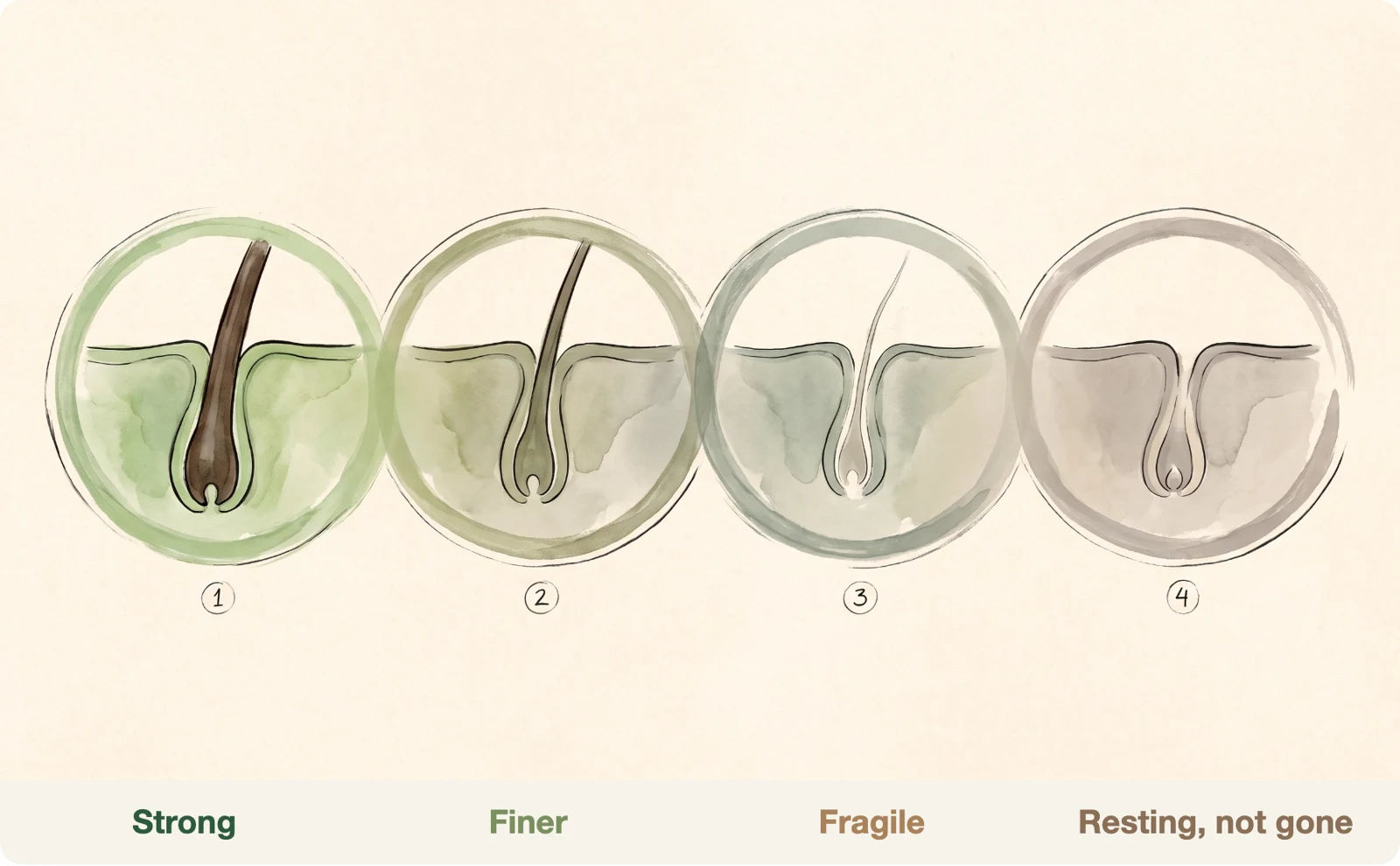
You can see the stages of it across a woman's head, usually in this order:

The part, first and always, because it is where the surface gets the most light and the most buildup per visible inch

The temples, where the finest hairs live

The edges, where a ponytail pulls on weakened roots

The overall density, which you notice the day the elastic goes around one extra time
It looks like aging. On the surface it even acts like aging. But here is the detail that changed how Susan saw the whole thing: a resting follicle is not a dead one.
"That's what got me," she says. "I'd already grieved it, honestly. And then this woman is telling me the follicles are mostly still down there. Just sitting under all of it, doing nothing."
Line up everything Susan bought over three years and a pattern shows up.
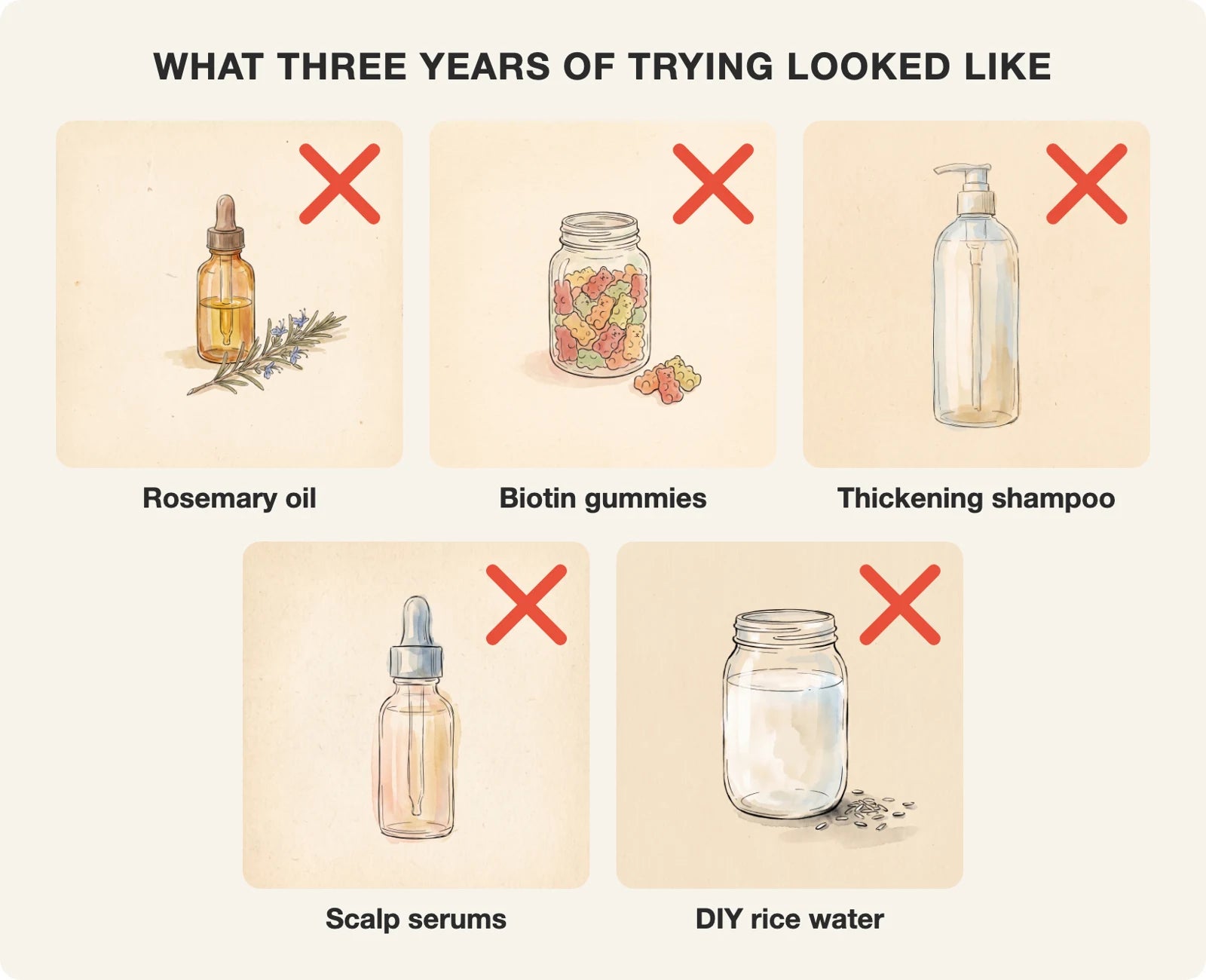
Rosemary oil. Sat on top of her hair. Biotin gummies. Went through her bloodstream, which her blood work already said was fine. Thickening shampoo. Coated the shaft to fatten its look for a day, then rinsed away. A $60 serum. Evaporated off the lengths. Rice water she brewed herself from a video. Poured over the top of everything, onto a surface already sealed with months of buildup.
"I had a drawer full of it," she says. "Half of them still full. My husband called it the hair graveyard, which I did not find funny at the time."
Later, the woman who changed her mind about all of it would put it in one sentence Susan still quotes: "Everything you used stopped at your hair. Your scalp never saw any of it."
None of it was snake oil. Most of it was aimed at the wrong surface.
It's a Thursday night in January, close to one in the morning, and Susan is on her phone in bed, deep in a Facebook group for women dealing with hair loss after 40.
She's read a hundred posts like this before. This one stops her.
A woman about her age lists her symptoms. The widening part. The drain. The itchy, oily roots by day two. The baby hairs that never grow up. Point for point, Susan's list.
But she isn't blaming her hormones, and she isn't selling a pill. She's talking about her scalp. About years of buildup nobody ever told her to clear. About a choked root. And about a 60-second scalp ritual from Korea she'd been doing in the shower, morning one included, with photos of her part five months apart in the comments.
"I sat up in bed, I literally said out loud, that's my exact list," Susan says. "My dog looked at me."
She read the whole thread. Then the comments. Then she did what any of us would do at one in the morning, and started googling why Korea.
The short answer: in Korea, scalp care is not a trend, it is a category. Treating the scalp as skin, with its own cleansing step, has been standard practice there for decades, the way double cleansing is for faces. What reached Susan's feed that night was a bar version of that idea, fermented herbs pressed into a solid you massage directly onto the scalp for about a minute.
The bar is built around 33 fermented plant extracts. Fermentation matters for one practical reason: it breaks plant compounds into smaller molecules the skin absorbs more easily.
Four things it does, in the order they happen:
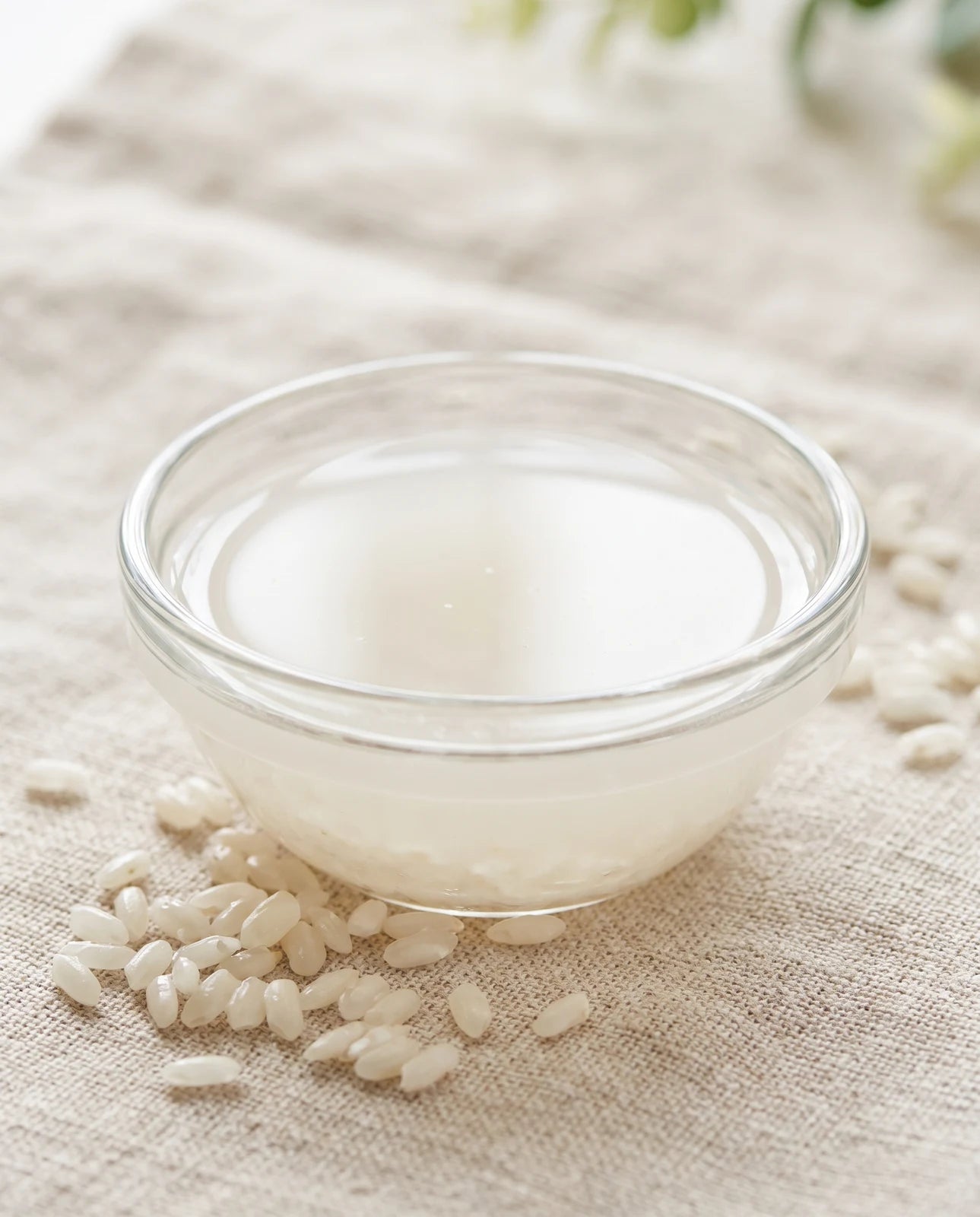
The bar's cleansing base, built on fermented rice water, does the job a regular shampoo skips: it lifts the packed sebum and residue off the scalp itself without stripping it raw. Best for: oily roots, day-two itch, that never-quite-clean feeling.
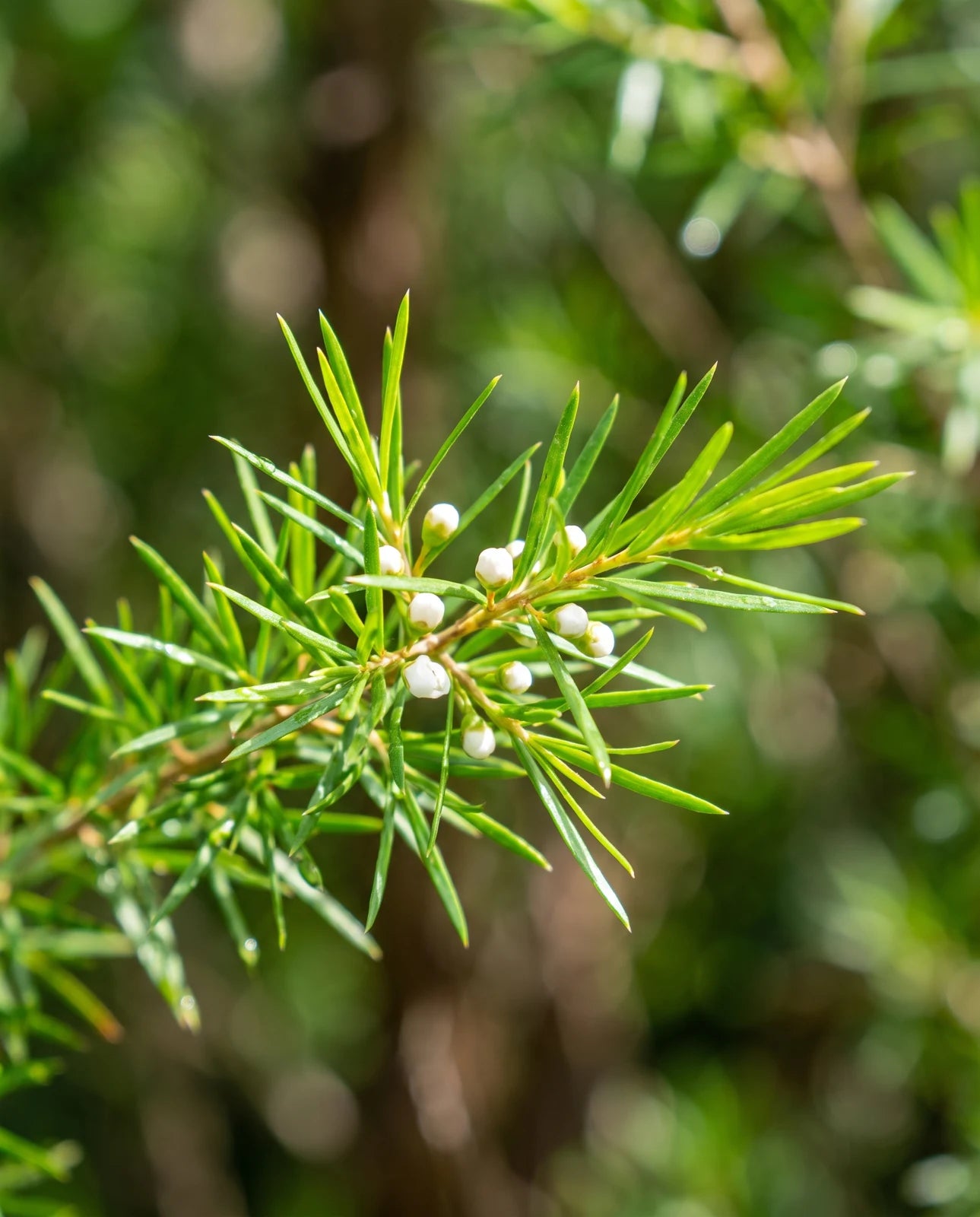
Tea tree and licorice extracts settle the irritation that buildup leaves behind. Dermatology research links a calmer, healthier scalp surface to hair being held longer. Best for: itching, flaking, tender roots.
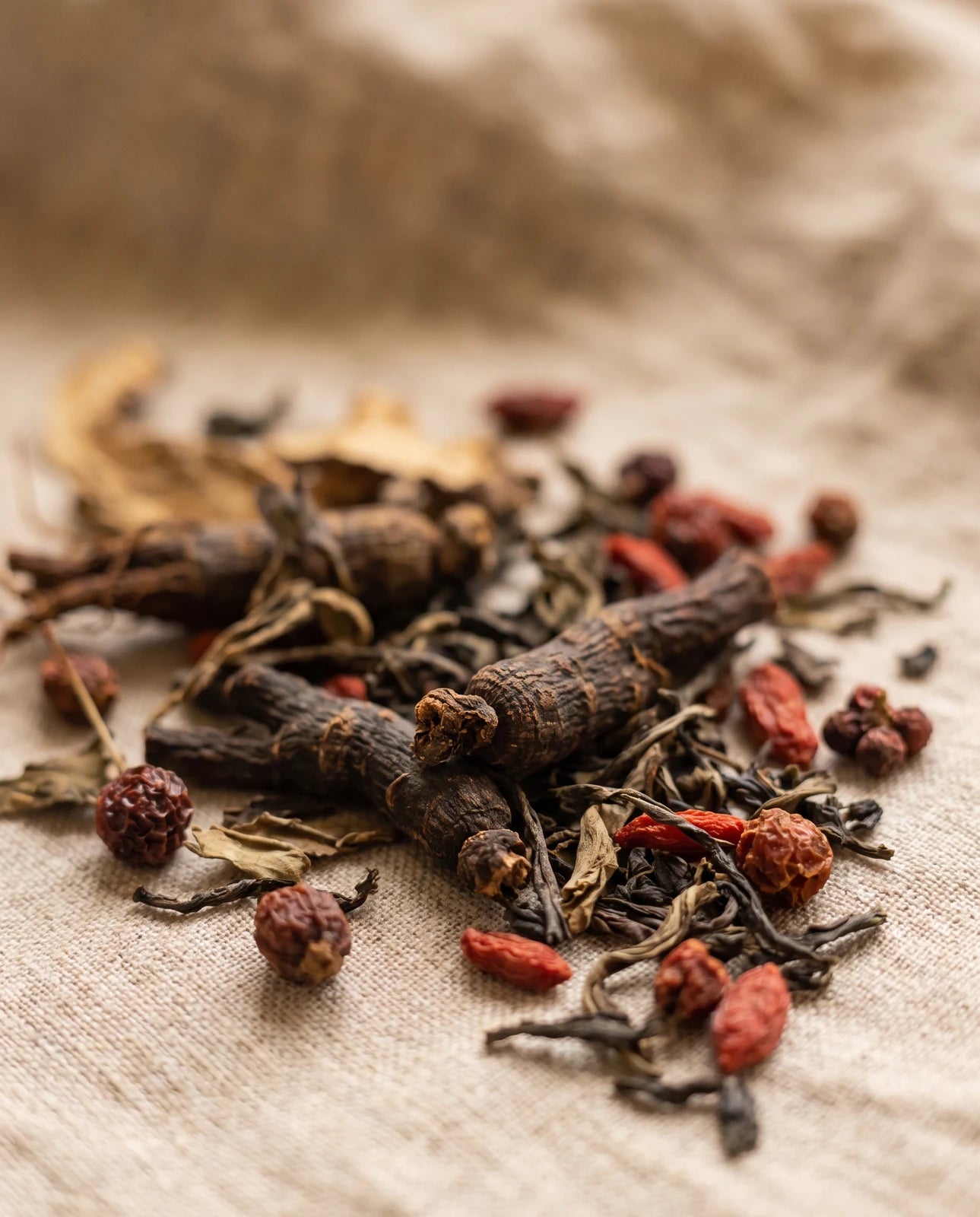
The first herb on the ingredient list, Platycladus orientalis, pushed resting follicles into their growth phase in lab studies. It is joined by He Shou Wu, used on the scalp in East Asia for generations, which extended the growth phase in lab research. Best for: the resting follicles under your part.
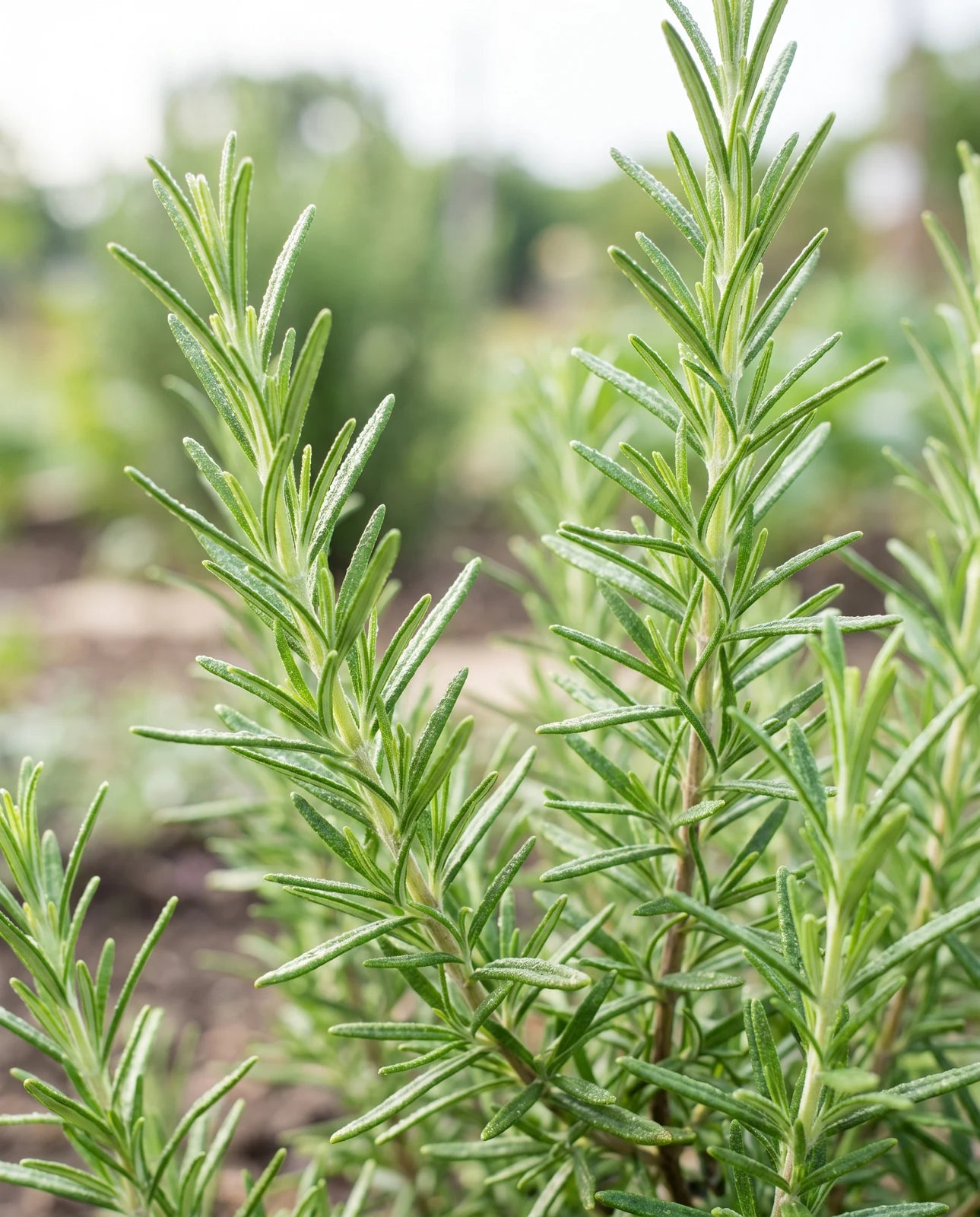
Rosemary and cedarwood oils, carried in jojoba and grapeseed. In a 1998 randomized trial on patchy hair loss, daily scalp massage with exactly this oil combination improved regrowth in 44 percent of patients, against 15 percent in the control group. And in a 2015 trial of 100 people, rosemary oil performed comparably to minoxidil 2 percent over six months, with less scalp itching. Best for: fine, fragile new growth.
The massage itself is not a detail, by the way. In a 2019 survey of 327 people doing daily scalp massage, two in three reported their shedding stabilized or reversed, self-reported but hard to ignore at that number. The bar format forces the massage: you cannot use it without rubbing it into the scalp.

Washes the buildup out at the root, not off the hair

Calms an itchy, flaky scalp

Supports the surface your hair grows from

One 60-second step, in the shower you already take

One detail worth knowing before the price: Yoracare is one of the few hair brands whose reviews include licensed U.S. clinicians, listed with their full names and NPI license numbers, which you can look up yourself in the federal registry. Not actors in white coats. That is rarer in this category than it should be.
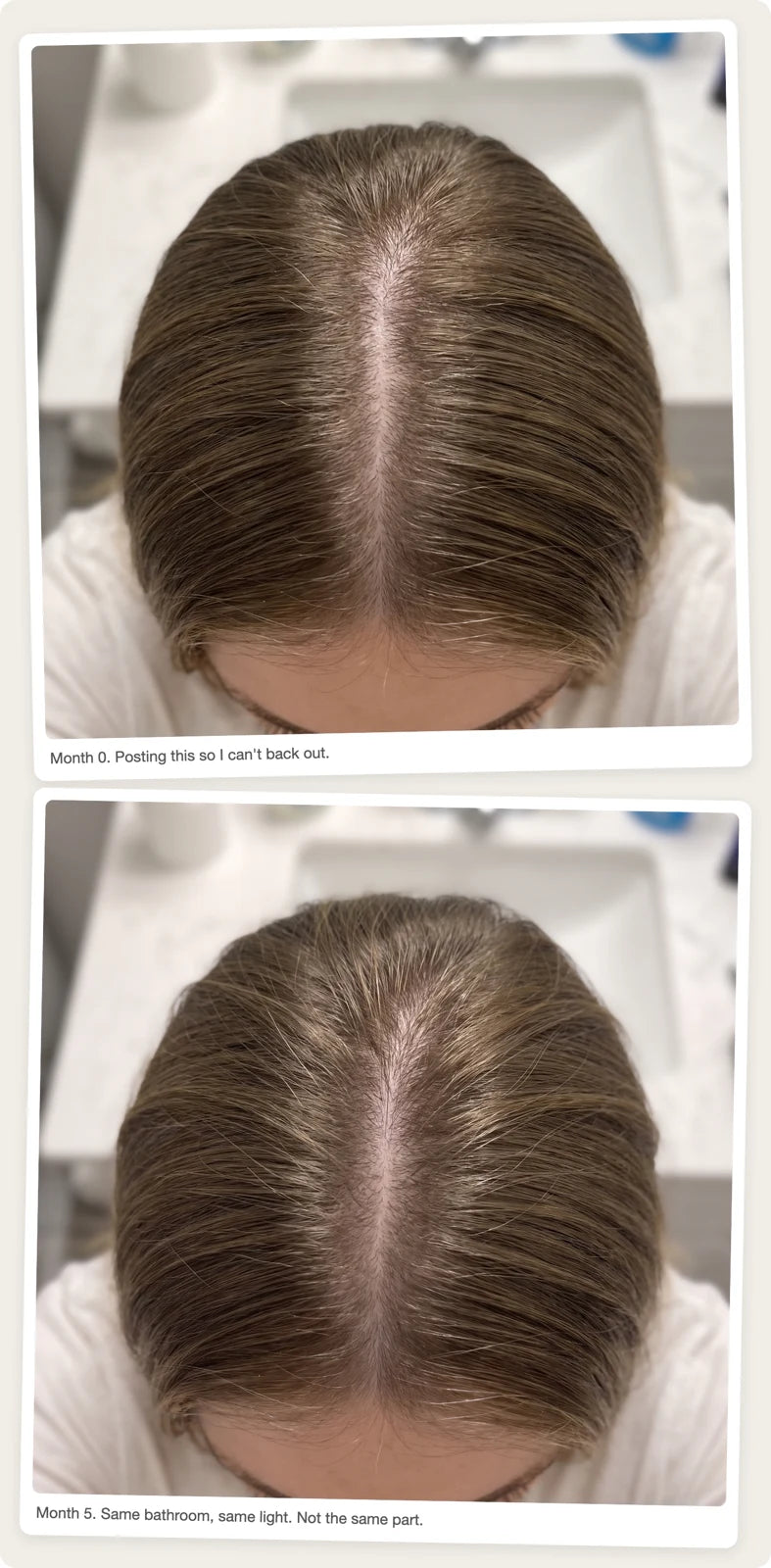
[Placeholder d'exemple — remplacer par de vraies photos clientes avant de scaler.]
"The photos in that group were what made me stop scrolling," Susan says. "These weren't influencers. They were women like me, posting their part from above in bad bathroom lighting. That's what I trusted."
"So I ordered it right there in bed, one in the morning," she says. "It came the Wednesday after."
"First week, honestly, the only thing I noticed was that my scalp felt clean in a way it hadn't in years. Like the difference between rinsing a plate and actually scrubbing it. It sounds small, it didn't feel small. And it made sense to me, because it was the first thing I'd ever put up there that was aimed at the skin instead of the hair."
"So week three, I cleared the drain catcher before my shower, because I wanted to count what came out after instead of eyeballing it. I know that's weird. I counted anyway. It was maybe a third of what I was used to pulling out."
"Around month two, I'm doing my part in the mirror and there's this fuzz standing straight up along it, maybe half an inch, all down the line. I called my sister and made her look at it on video. She said, those weren't there at Christmas."
"And in October she took another photo of us from behind, at my niece's wedding. I didn't ask her to delete this one. It's on my fridge."
"That morning mirror check? I still do it. But I'm not bracing myself first anymore."
Name changed for privacy. Susan's account is a composite drawn from experiences described in verified customer reviews. The referenced studies were not conducted on Yoracare products. Individual results vary.


If it does nothing for you, they refund you. No questions asked, nothing to send back.


I've tried everything under the sun for my thinning. This is the first thing that made my scalp feel actually clean. Three weeks in and there is noticeably less hair in my brush. [Exemple — remplacer par un avis réel verbatim.]
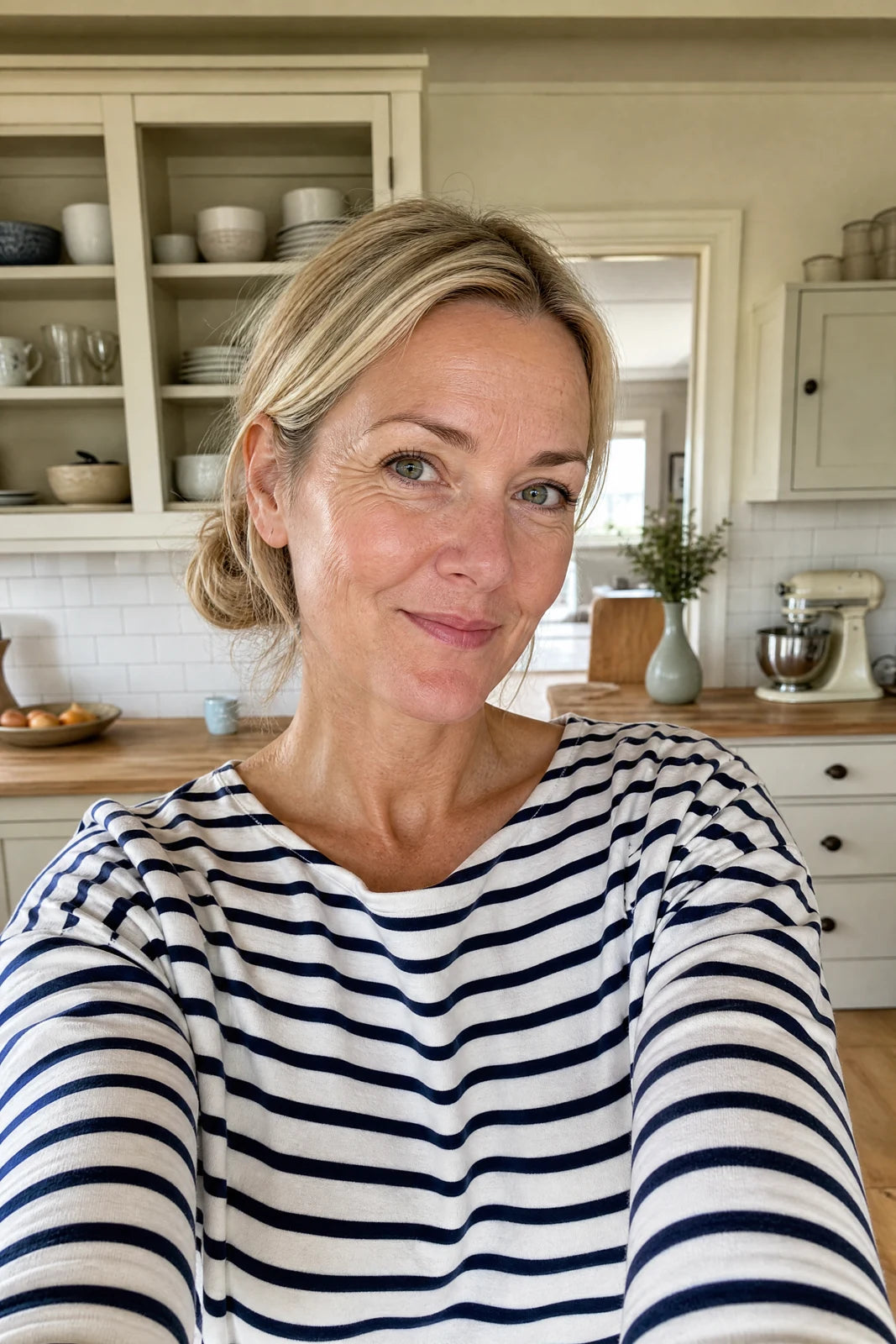
Less hair in the shower drain after about two weeks. I was not expecting anything that fast. [Exemple — remplacer par un avis réel verbatim.]

Month two and I have baby hairs along my part. My daughter noticed before I said anything. [Exemple — remplacer par un avis réel verbatim.]

I have gray hair and was worried it would stain or tint it. It doesn't. My scalp feels better than it has in years. [Exemple — remplacer par un avis réel verbatim.]

Sixty seconds and done. It replaced my shampoo completely and my roots aren't greasy by day two anymore. [Exemple — remplacer par un avis réel verbatim.]
1 bar $29 · 2 bars $39 with a free conditioner, free gift and free shipping.
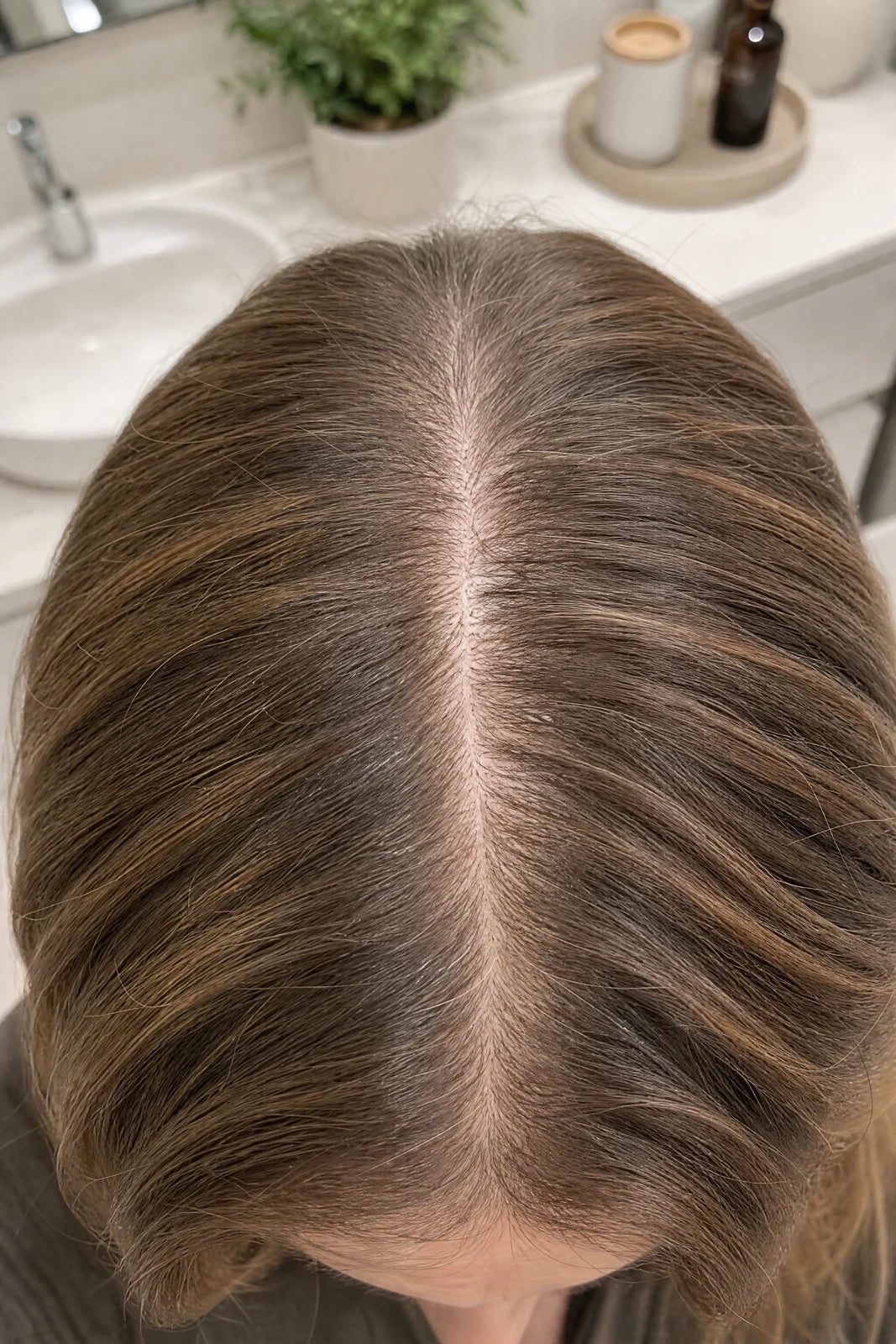
This part is about feel, not hair. A scalp that stays clean past day one, less itching by the end of the week. The lather is real, for the record: rub the bar between wet hands and it foams like any shampoo. Rubbed straight on the scalp it foams less and works the same.
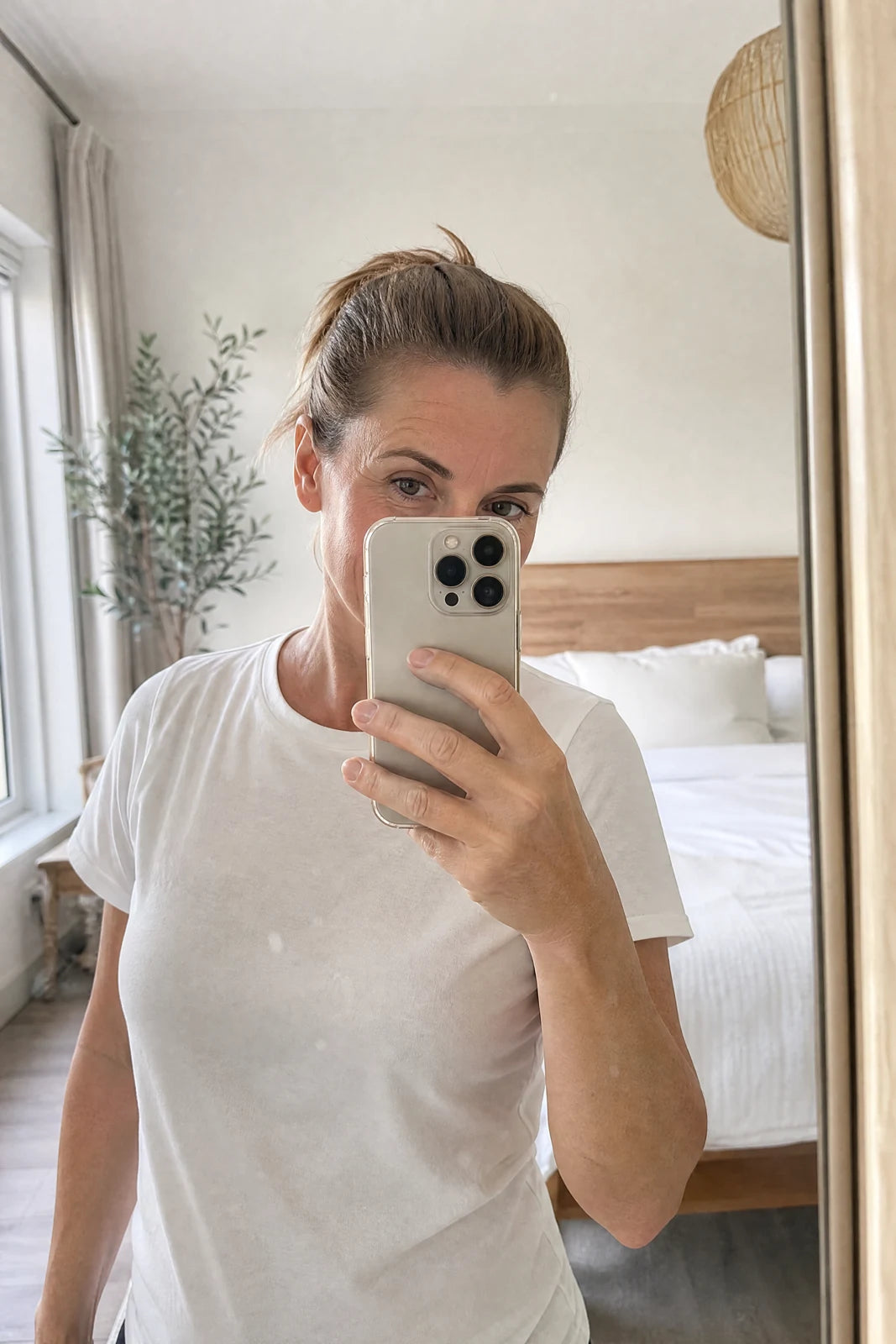
This is when women in the reviews most often mention the drain and the brush. Shedding is the first thing that tends to quiet down, because it is the last stage of the problem, so it responds first.

This is where the baby-hair reports cluster, that fuzz along the part that means a follicle went back to work. It is also, for what it's worth, when most customers place their second order.
No overnight anything. A follicle that spent years downshifting takes months to shift back, and anyone who promises you faster is aiming at your hope, not your scalp.
One version: another year of clearing the drain, angling away from cameras, checking the freckle. Another expensive bottle joins the drawer.
The other version: sixty seconds in a shower you were already taking. And somewhere around month two, you catch yourself looking at your part under the bathroom light out of curiosity instead of dread.
Susan's follicles were never gone. They were sitting under three years of buildup, waiting for someone to clear the surface above them.
Yours have been up there doing the same thing this whole time.
"I'd spent over six hundred dollars in three years on things that stopped at my hair," Susan says. "The bar was twenty-nine. With a refund if it did nothing, and you don't even send it back. At that point, not trying it would have been the strange decision."

Today's offer:
1 Korean Scalp Revival Bar — $29
2 bars — $39, plus a free conditioner bar, a free mystery gift, and free shipping

Over 10,600 verified reviews. Reviewed by licensed clinicians you can look up by name.

The feel of a cleaner, calmer scalp: usually the first week. Hair itself moves on follicle time. Shedding tends to quiet first, in the reviews most often around weeks two to four, and baby hairs cluster around months two to three. Timelines vary, which is what the guarantee is for.
Most products treat the hair shaft or the bloodstream. This treats the surface the hair grows out of. If buildup at the root was your problem, nothing that stops at the hair was ever going to reach it.
Yes. The bar does not stain, tint, or darken gray or white hair, and color-treated hair is fine. Your scalp does not know what color your hair is.
Rub it between wet hands and it lathers like a regular shampoo. Rub it directly on the scalp and you get less foam and the same effect. Both are correct ways to use it.
Thirty-three fermented plant extracts, Platycladus orientalis first on the list, with tea tree, licorice, rosemary, cedarwood, jojoba, and grapeseed. No sulfates. The full ingredient list is on the product page.
It is a topical cleanser, not a drug. If you are under treatment for a scalp or medical condition, ask your doctor, as with any new product.
Then you get your money back. No questions asked, and nothing to send back. You are risking the time it takes to try it, not the money.
1. American Academy of Dermatology, "Skin conditions by the numbers": androgenetic alopecia affects an estimated 80 million Americans, 50 million men and 30 million women.
2. Trüeb RM et al., "Scalp Condition Impacts Hair Growth and Retention via Oxidative Stress," International Journal of Trichology, 2018 (PMC6369642).
3. Punyani S et al., "The Impact of Shampoo Wash Frequency on Scalp and Hair Conditions," Skin Appendage Disorders, 2021 (n=1,500).
4. Berger et al., placebo-controlled trial of scalp-directed shampoo, hair count increase at 9 weeks (cited in Trüeb 2018).
5. Hay IC et al., "Randomized Trial of Aromatherapy: Successful Treatment for Alopecia Areata," Archives of Dermatology, 1998 (44% vs 15%).
6. Panahi Y et al., rosemary oil vs minoxidil 2%, SKINmed, 2015 (n=100).
7. English RS, Barazesh JM, "Self-Assessments of Standardized Scalp Massages for Androgenic Alopecia," Dermatology and Therapy, 2019 (n=327, self-reported).
8. Koyama T et al., "Standardized Scalp Massage Results in Increased Hair Thickness," Eplasty, 2016.
Results may vary. This page is an advertisement for Yoracare. The studies referenced above were conducted on the ingredients or on scalp care generally, not on Yoracare products. This is an advertorial and not an actual news article, blog, or consumer protection update. These statements have not been evaluated by the FDA. This product is not intended to diagnose, treat, cure, or prevent any disease.

© 2026 The Strand Report. Sponsored content.
